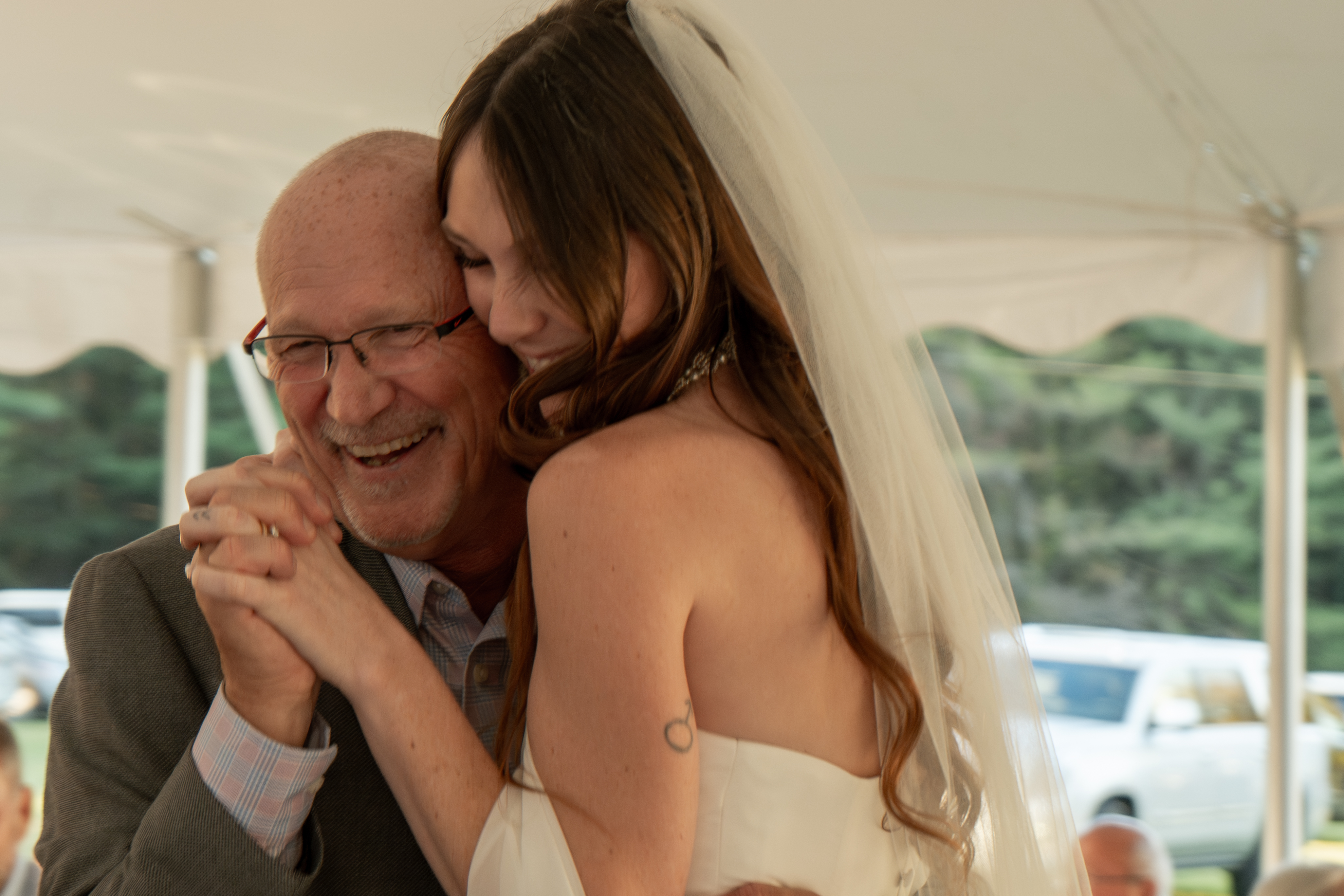
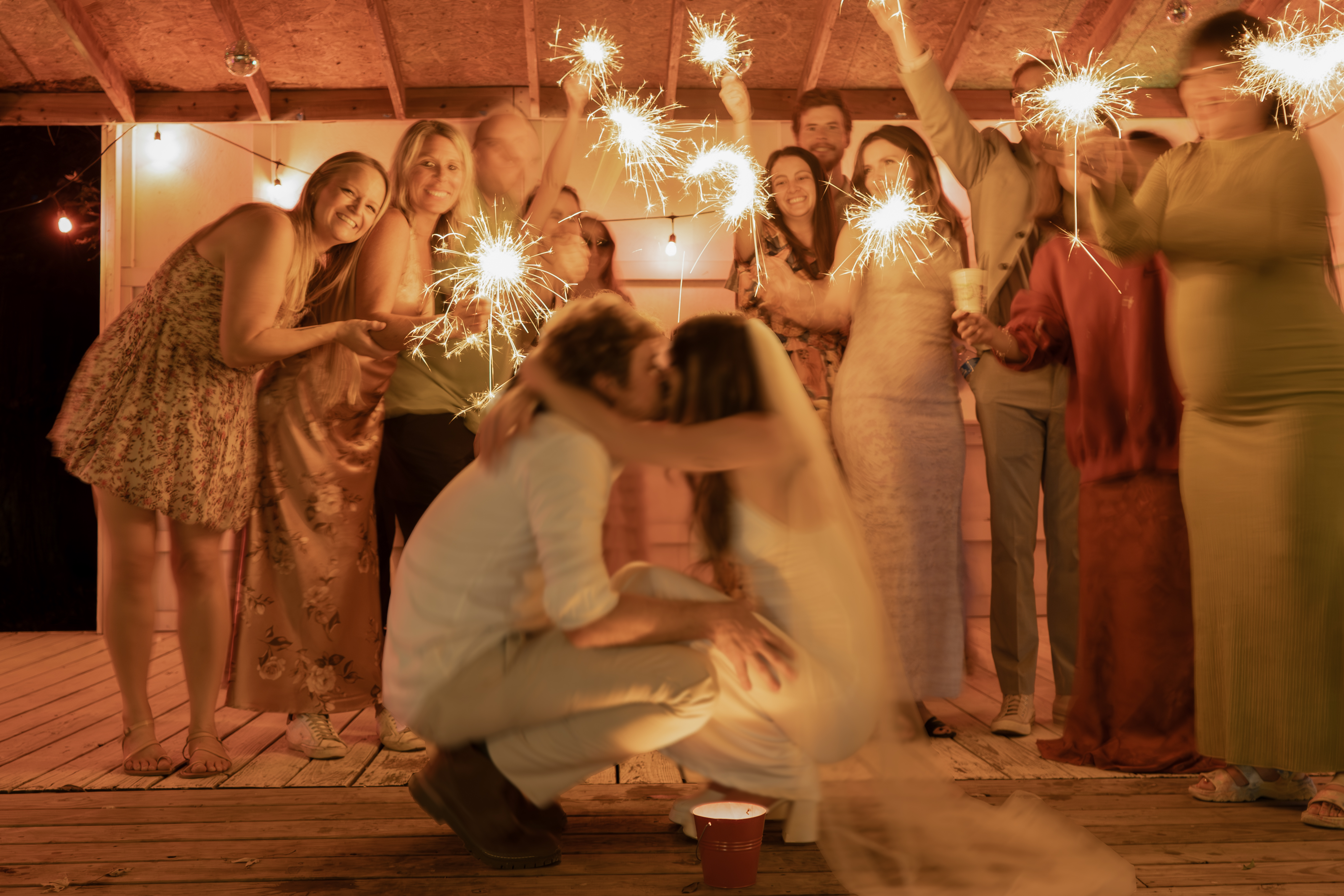
The kind of film you pass down doesn't look the same as the highlight reel you post on Instagram. I shoot on vintage Hi8 camcorders, the same format your parents used to film birthday parties in the 90s. I chose this format for two reasons.
The first is because the footage feels like a memory. Not "cinematic" or "editorial." It's memory. And fond memories are warm, a little fuzzy, textured and completely human.
The second is because people actually act like themselves in front of a camcorder. They are less performative and more likely to actually say something that sounds like them. They may even act a little sillier. I have a degree in journalism and have worked on documentaries and I know firsthand that when you stick a camera in someone's face they start acting strange. And I want you to see the people you love, and the day you spent with them, as close to how you remember it as possible. We don't need someone getting scared of a giant light and crew and huge camera lens. Less is more.
There are a lot of people out there who do the DIY camcorder thing. But I offer something cooler. There's a difference between handing a guest a camcorder and hiring a filmmaker with a camcorder. The first is a fun activity and you will definitely get some cool stuff. But the second is an heirloom film. When the camcorder trend started picking up, a lot of people assumed it was another aesthetic, a filter, a vibe, a TikTok moment. And some of it is. People have even blasted me on social media saying "Why don't you just use a normal camera and then distort it to look like a camcorder?" I was appalled. You just can't replicate something like this. It's there at the time of capturing and you just can't get that with a filter.
The couples who come to me aren't looking for a look. They're looking for something that feels real when they watch it back in twenty years. Hi8 tape has a physical and unimposing quality that does something to a room. The camera is small. It doesn't have a crew around it. It doesn't ask you to look a certain way or pretend to be someone you aren't. People are comfortable. And when people relax, the magic starts. And that's what I'm there to capture.
I'm here to witness you and guide you, and preserve the real memories so you can keep making more with your family when you rewatch this in a few years.
A huge part of my process is the interviewing. I talk to your people throughout the day while everything is going down and the emotions are still alive. I have a question bank I've developed over years of documentary work and I know how to get people to open up. Their real words and real voices become the backbone of your film. This is storytelling. It shows you things you weren't even in the room for.
What you get back isn't a highlight reel set to a song you'll be sick of in three years. It's a time capsule, shot on Hi8 tape, edited with a documentarian's eye. When you watch it back I want you to feel like a fly on the wall who can time travel. You're getting married to make memories with your family. I just make sure you can relive them.
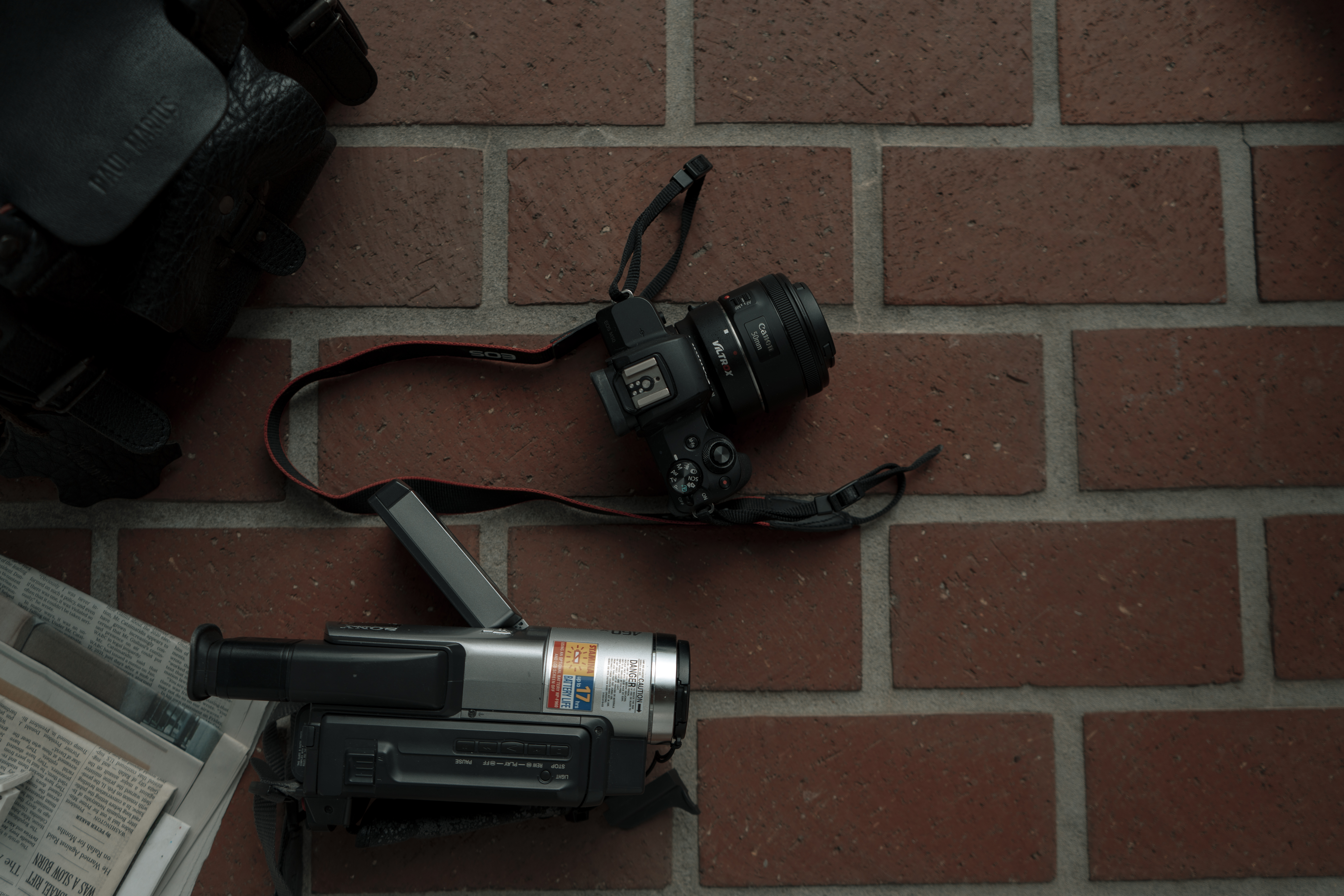
Primary Camera — Sony Hi8
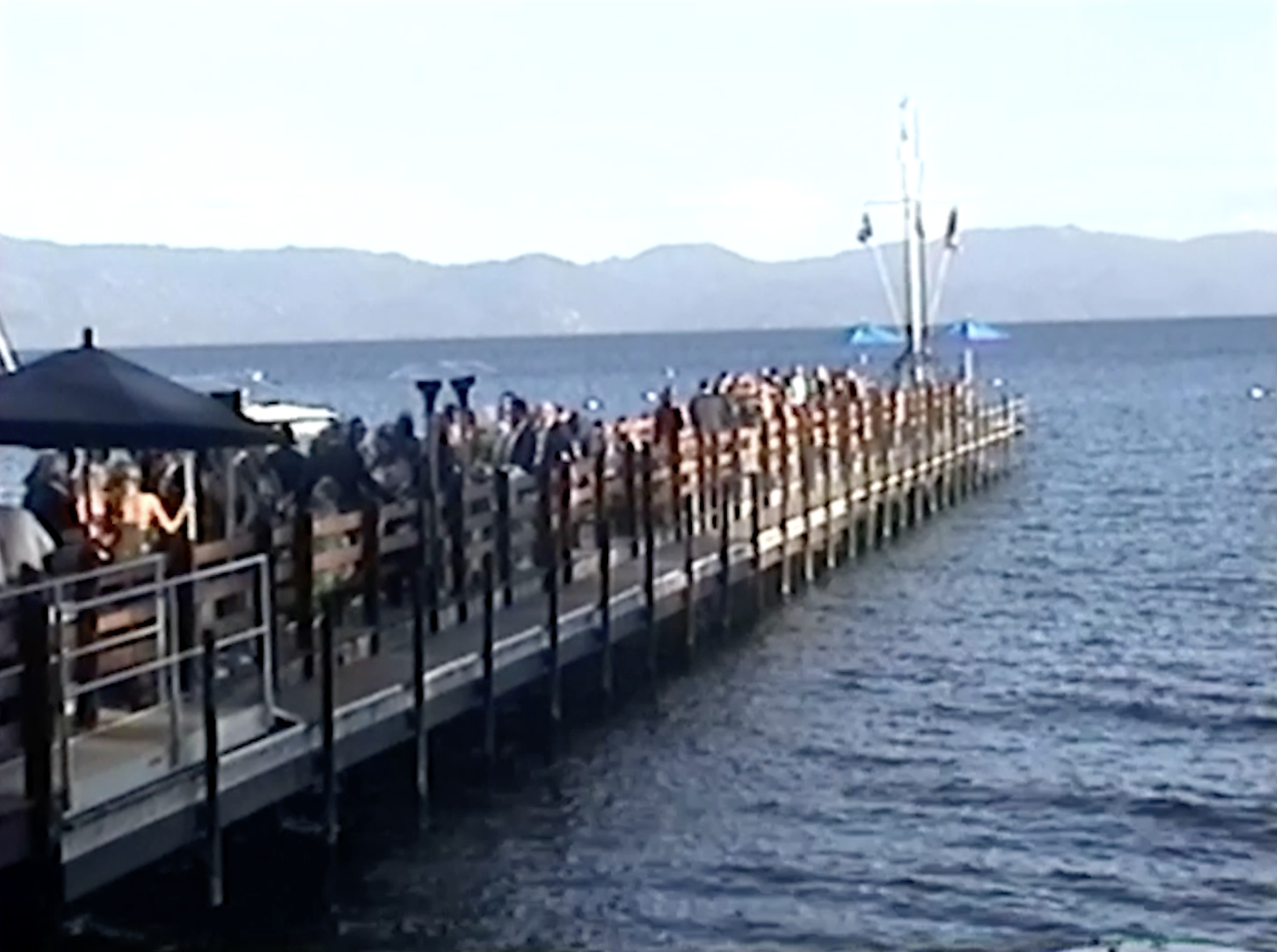
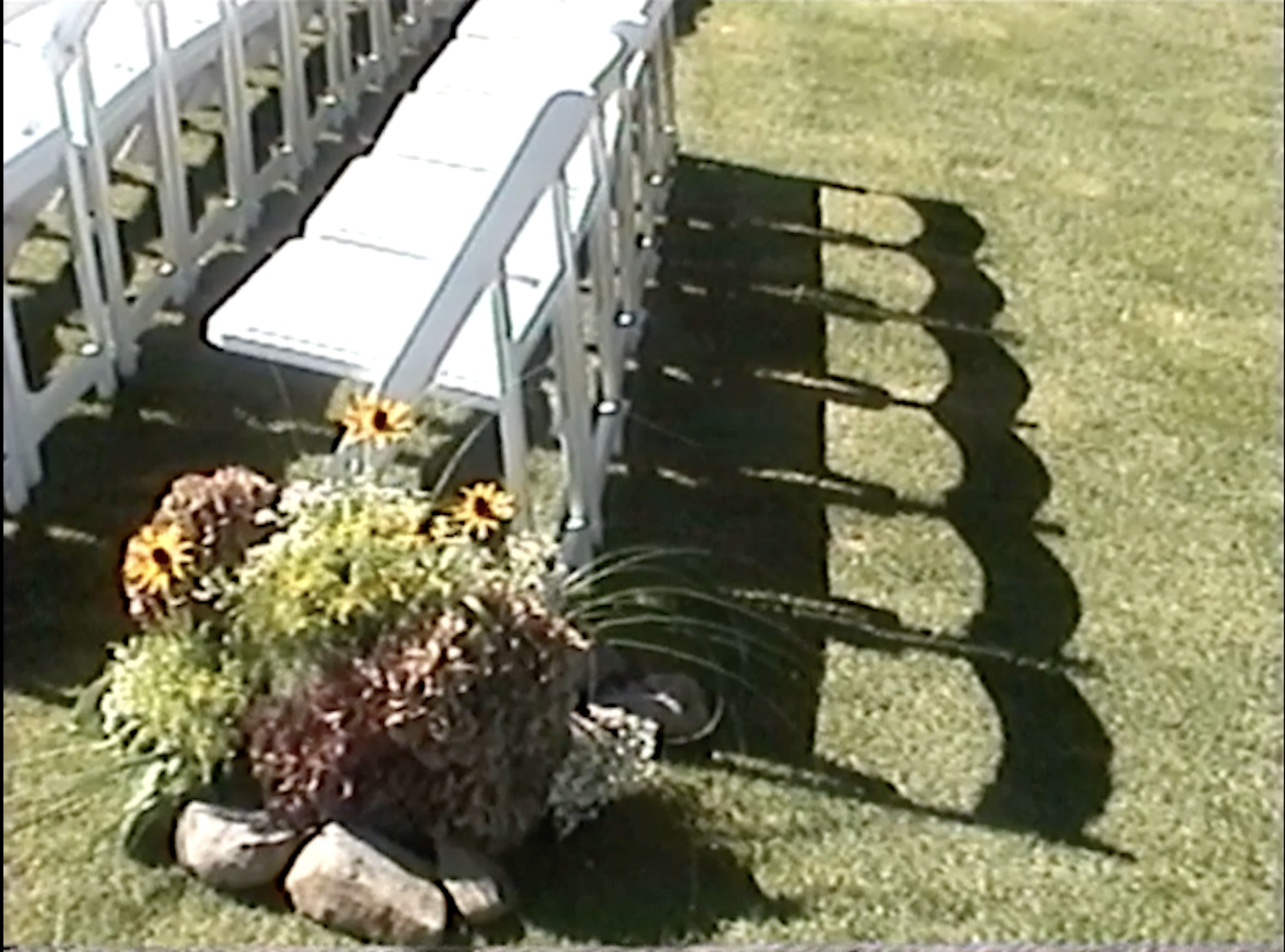
Dock Footage — Atmosphere
So you saw the Super 8 wedding film trend and you think it's beautiful. You've been searching for super 8 wedding videos, looking at analog wedding videography options, maybe even the camcorder wedding video aesthetic. You love the grain, the texture, the feeling of memory and timelessness. And you're wondering if it's right for you? In this post I'm going to clear up a few questions and compare it to another format that you might love just as much.
If you're on this page you're probably here for one of two reasons. You're either curious about whether an analog format is right for your wedding, or you're here because you care about technical specs, resolution, and deinterlacing techniques. If you're in the latter category — this post is not for you. But if you're a bride, groom, or wedding vendor trying to understand your options, keep reading.
You've probably seen the Super 8 trend that looks like old Hollywood and maybe you've come across the camcorder wedding aesthetic too. Maybe you've heard the word analog thrown around and you just want the most beautiful and cool wedding video you can get. If you've really done your research you may have even heard about Wedding Weekender — the camcorder rental service that went viral. In this post I'll talk about Super 8 and its lesser known descendant Hi8 — what they are, what you get with them, and who each format is actually for, so you can make an informed decision.
One thing to clarify before we get into it: while Super 8 and Hi8 are both analog formats, rental camcorders and Digital 8 are not. That distinction matters and we'll get into exactly why.
Super 8mm Wedding Videography and Hi8 — The Formats Explained
Super 8
Much like old film reels, Super 8 uses a light-sensitive emulsion. It's a tiny 8mm strip of film that captures a series of still images — and when you play them back fast enough, you see people move. It's much closer to 35mm film than anything digital. Think of it like shooting one roll of 35mm film per second of video. That would be expensive — well, that's exactly why it's 8mm. Same concept, smaller frame. Light comes in, hits the film directly, a chemical process occurs, and bang — moving pictures. Super 8 was widely used throughout the 20th century until Sony came along and changed everything.
Film based, not tape. No sound — audio sync is technically possible but inconsistent because Super 8 doesn't record at a consistent frame rate. 3-4 minutes per reel. Sent to a lab for processing — 8 to 16 week turnaround. Requires controlled lighting conditions. Almost always an add-on to a digital package, not a standalone.
Hi8
Hi8 stands for High Video 8 — higher resolution, better color, still fully analog. It's the same tape your family used to pop in and watch home movies on. Unlike Digital 8, which is not an analog format, Hi8 preserves that textured warmth, that grainy timeless energy — the feeling that what you're watching actually happened somewhere, to real people, on a real day.
One important note: Hi8 is not VHS. It's actually a higher quality format with better resolution and color fidelity. Don't let the cassette fool you.
Shortly after Super 8 became the go-to for home movies, Sony noticed a problem. While 8mm film was great for short reels, audio was never really solved — you could connect a separate microphone and speaker to your projector, but it was a hobbyist workaround. And because Super 8 doesn't record at a consistent frame rate, syncing audio separately doesn't always work either. Sony introduced Video 8 in the mid-1980s as the first consumer analog tape format, then refined it into Hi8 in 1989 — and suddenly you had sound, tapes that could record for up to two hours, and a camera that didn't require a darkroom. Legendary.
This is probably around the time a bunch of regular people realized they could be wedding videographers. Recitals, birthday parties, Christmas morning, weddings — all of it got recorded on Hi8. And because the footage lived on tapes you watched on your own TV, it developed — in my opinion — a certain anthropologically and metaphysically complete quality. Something so human you can't help but love it.
Tape based, analog magnetic format. Full sound and video. Up to 2 hours per tape. No lab required — archiving done digitally. Small, unobtrusive, one videographer. Can be your entire wedding film, not just an add-on.
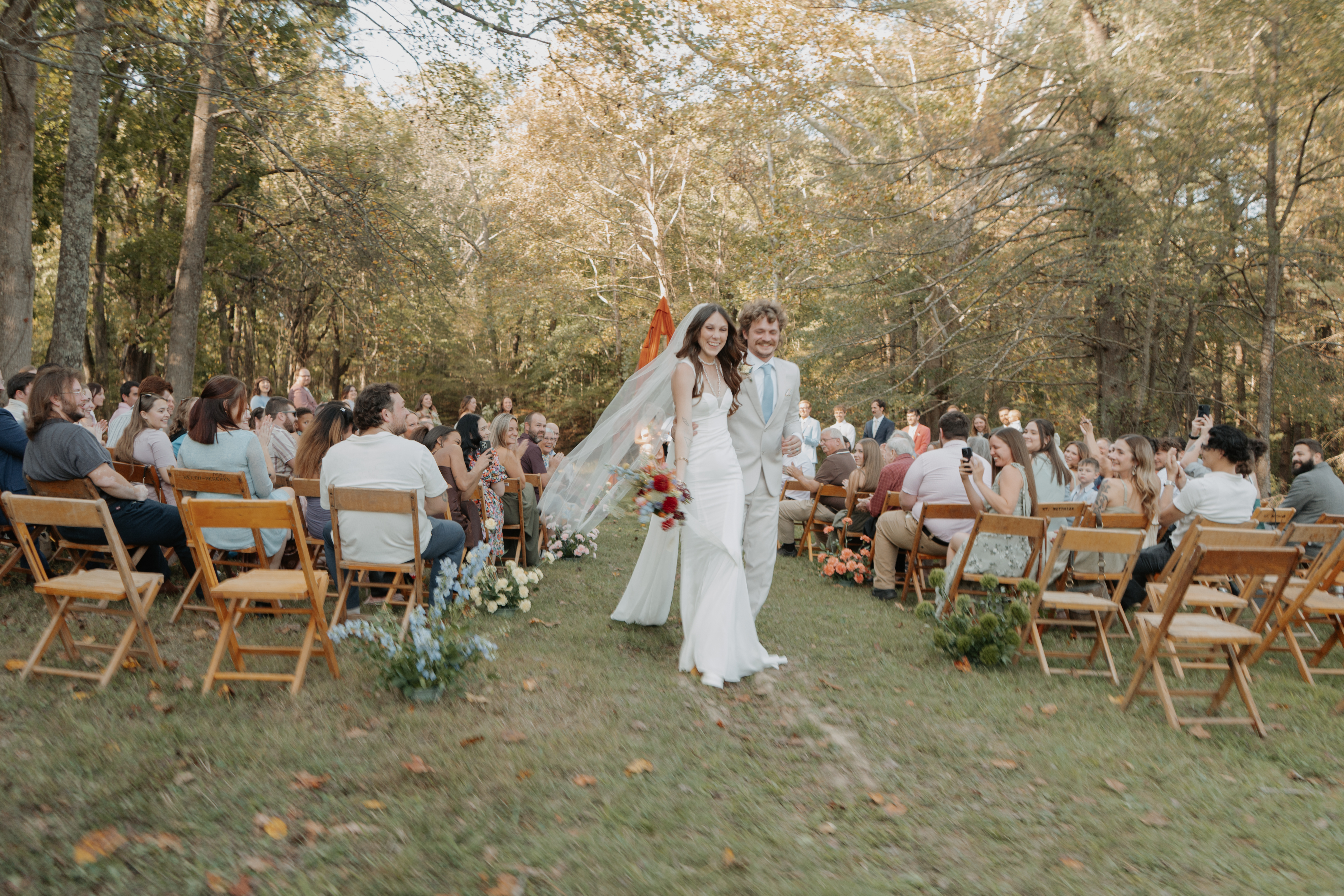
Tahoe Ceremony — Hi8
Super 8 Wedding Video vs Hi8 Wedding Film — What You Actually Get
Super 8
Super 8 is almost always an add-on to a digital video package. It's ideal for short beautiful cuts — and speaking of which, is "supercut" actually derived from Super 8? I genuinely don't know but I'd like to think so. What it's not ideal for is your entire wedding. If you tried, it would be extraordinarily expensive and you'd have no audio. The reason Super 8 looks so stunning on Instagram is partly because we're conditioned to watching videos set to music — which makes the lack of sound completely invisible. A gorgeous grainy Super 8 clip with the right song underneath it? Dreamy. Your grandmother's speech with no audio? Less so.
Short cinematic clips, not a full film. Stunning set to music. Silent — ideal for Instagram, less ideal for toasts, vows, speeches. A beautiful add-on to a digital package.
Hi8
Hi8 camcorders are fully operational with sound and video. You could have your entire wedding filmed on Hi8 instead of just a few short clips. The result looks less like short polished music videos and more like a beautiful candid home movie you might find in your grandma's basement from your aunt's wedding in 1994. I've actually found both in my grandma's basement. I definitely enjoyed the Hi8 more. There were people from the past no longer with us, leaving messages through time. I felt like I was part of history and watching it at the same time.
Full length wedding documentary, not just clips. Sound captures toasts, vows, messages, laughter, everything. Feels like a home movie, not a highlight reel. The people you love, talking to you, preserved forever.
Real Moments — Hi8
The Experience at Your Wedding
Super 8
A Super 8 shoot typically involves a team of videographers shooting both digitally and on film, making deliberate choices about when and where to roll the analog camera. Most will set aside a portrait or Couple's Hour between the ceremony and reception — a dedicated window where the light is planned for and the expensive, light-sensitive film can have its moment. After the wedding the videographer sends the film to a lab to be processed and developed, then transferred to a digital file for editing. I don't know if anyone is still editing Super 8 the old-fashioned way but if you are, call me.
Full crew. Planned lighting windows. Portrait hour dedicated to Super 8 shots. Lab processing after the wedding — months before you see it. Add-on cost on top of your digital package.
Hi8
A Hi8 videographer works like a vintage wedding videographer from a different era — small camera, no crew, just presence. Hi8 will feel much less planned and much less obtrusive. You can get away with a single videographer instead of a crew. And there's sound — which means you can hear what people are saying, the toasts, the vows, the messages they leave for you on camera. The way people act around Hi8 camcorders is organic, candid, and familiar. This is the less performative version — which is exactly what makes it precious and quiet.
Both formats are analog and both feel timeless, just in different ways. Both will be converted to digital for editing. Hi8 uses an archiving technique — and have some appreciation for your videographers here, because they have to sit and rewatch the entire tape in real time during the conversion. Then let it render. These formats are a camera nerd's dream.
One videographer. No planned lighting windows or portrait hours needed. Sound captures everything as it happens. Organic, candid, unobtrusive. Faster turnaround.
Who Each Format Is For
You want polished, cinematic, silent aesthetic pieces. You like to save the special moments for a curated look. You want beautiful music videos set to songs. You want the old Hollywood feeling, the Lana Del Rey music video energy. You already have a digital videographer covering the full day and want Super 8 spliced in. Instagram upperhand matters to you.
You care about the feeling of the day, the honesty in it. You want the unperformed version of your love. You want to hear your people's real voices in ten, twenty, forty years. You don't want a crew or a production at your wedding. You want one person who disappears into the background. You want something your family will actually watch forever.
There's something about the way home movies were made before Instagram that feels irreplaceable. More human. Less performed. And I keep coming back to that.
Now, some camera people will say — but you can have audio with Super 8. Just put a lav mic on them. And yes. You are correct. However, we know from the double slit experiment that things behave differently when being observed. A lav mic on someone changes how they move, how they talk, what they say. You might get their words but you'll miss the small unobserved moments. The gossip in the background. The things whispered in a crowd while dancing. The unrepeatable stuff.
Both are valid. They're just doing different things.
My personal recommendation: Hi8 for a wedding. Super 8 for an engagement.
Still here? Good.
If any of this resonated with you — the home movies, the honesty, the idea that your wedding day should sound like your wedding day — I'd love for you to check out what I do. I offer Hi8 wedding documentary films. Long form, real people, real messages. Analog capture. Timeless, dreamy, and completely unobtrusive. I ask the questions, hold the camera, and stay out of your way while you go be in love.
June 2025
Reflections on the 2025 wedding season
This year brought me to some of the most beautiful locations I've ever filmed. From Lake Tahoe to the Chicago Riverwalk, I feel like I've been slowly reeling in the thread that ties together all the work I've done throughout my journey as a creator.
That thread: witnessing people in their vulnerable moments, and gifting that to them with love, care and shared vulnerability. By creating work that says "you don't need to pose, you're already enough, I'll capture you honestly," I prove to myself, over and over, that being seen can be sacred instead of threatening, that vulnerability can be honored instead of exploited.
Constant performance has slowly compromised the true feeling of special moments. I'm releasing that need to perform and focusing on the real memories.
This year I finally solidified my mission and who my work is for.
this is what it's all about
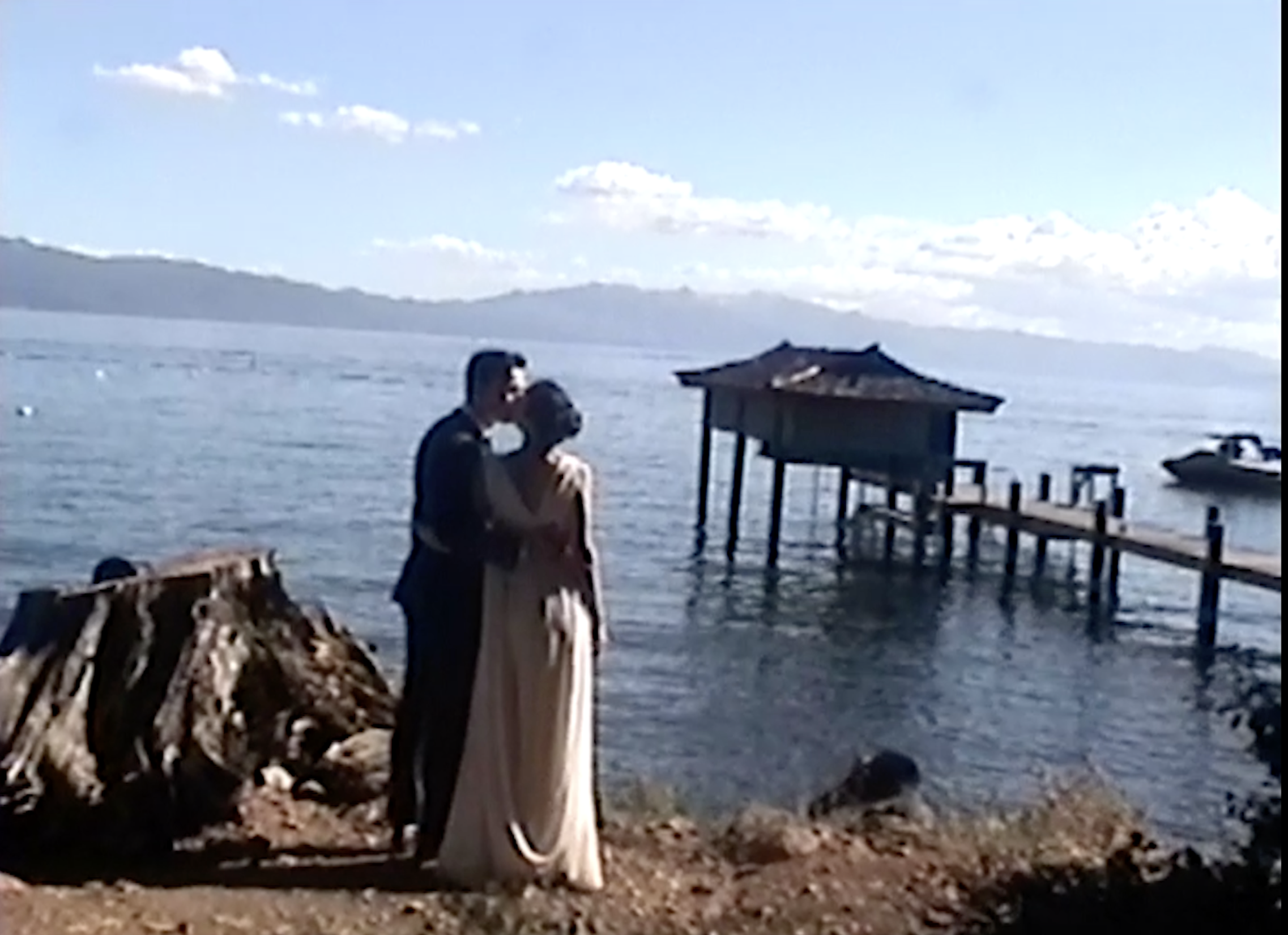
Tahoe Wedding — September 2025
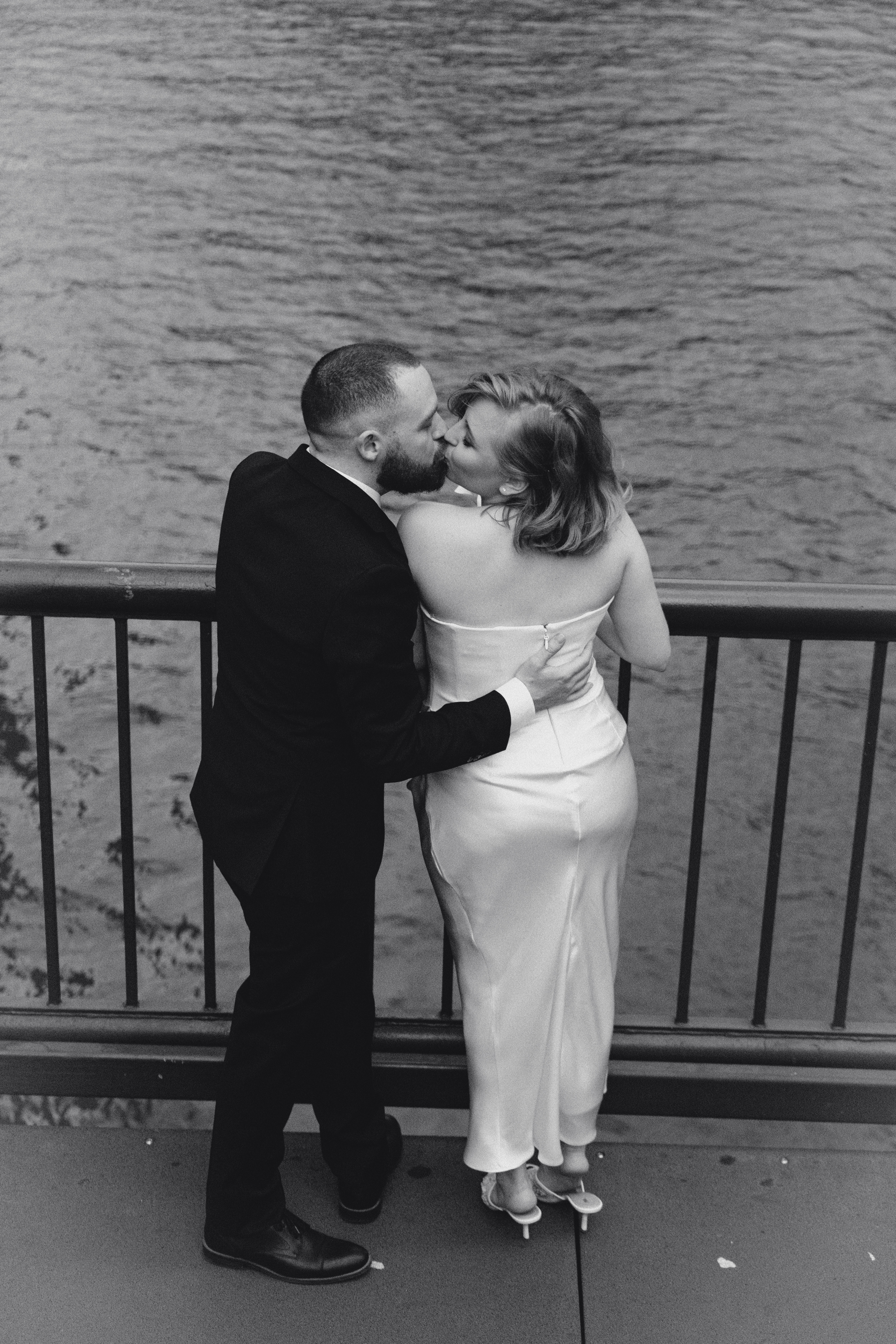
Chicago Elopement — Fall 2025
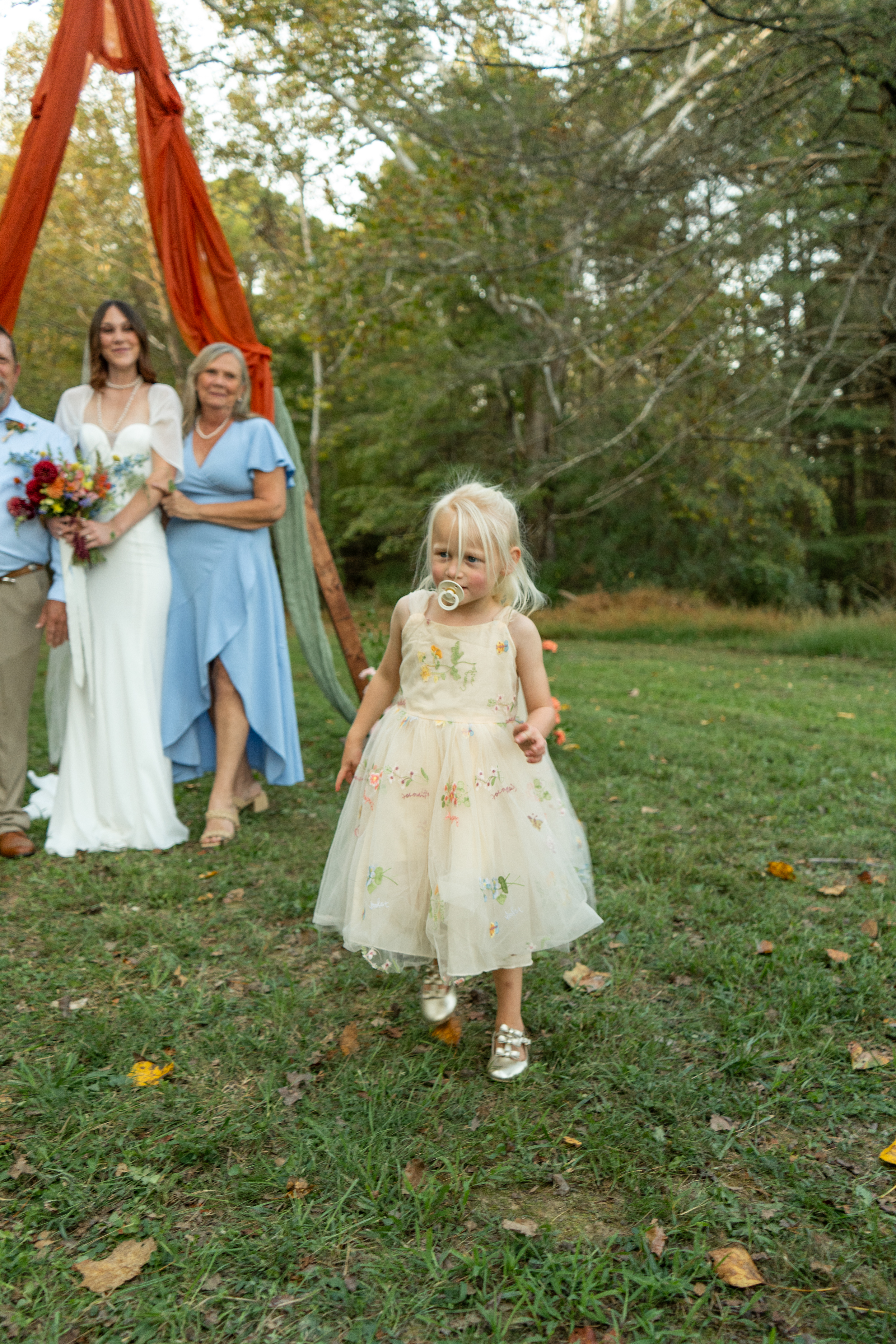
Bloomington Wedding — October 2025
September 30, 2025
Layne & Brett — Lake Tahoe
Golden hour on the lake. THE COUPLE ARRIVING ON A BOAT!! Are you kidding?! So cute. And such a cool idea. It's one of those perfect moments you can't forget, and I feel like it really showed the personality of this couple. It was elegant and impactful but somehow not ostentatious, still understated. Totally Tahoe.
A huge part of the documentary process is the question writing and knowing who to ask. This wedding was such a breeze. Respectful interviewing is at the center of what I do, and I am so excited that the questions I prepared actually landed the way I hoped. There is always a fear that what you planned won't go over the way you thought it would, and I am pleased to say this went even better. Most notably, I started with the maid of honor and asked her a few simple questions during cocktail hour. She then introduced me to someone else, and that person introduced me to someone else, and so on. After just two interviews, a line started forming. People could not wait to share their love and their messages with the couple. Someone even wrote a poem. Like, what?! How did she know I was going to be there? lol.
In all seriousness, it is terrifying to be forgotten, but even more terrifying to be remembered. Saying something on camera that might end up in someone's wedding video, rewatched on anniversaries for decades to come, is a powerful and vulnerable position to be in. I am so grateful that Layne & Brett's guests trusted me with that.
This wedding reminded me of just how powerful art can be. Fifty years from now, someone will watch this and feel like they were there. Something beautiful happens when you give people the opportunity to finally wax poetic about something only they notice about a moment in time, something they already knew, but maybe hadn't shared with anyone yet. Documenting those messages makes those memories real and lasting. After meeting the people who are important to Layne & Brett and hearing them share why they love this couple so much, I feel so much closer to them. I love love!
I am beyond grateful for the collaboration with my dear friend Abi Harte and her impeccable taste. She is one of the main reasons I am able to courageously declare myself an artist, and her work continues to impress me every day. Check out her website: abihartephotography.com
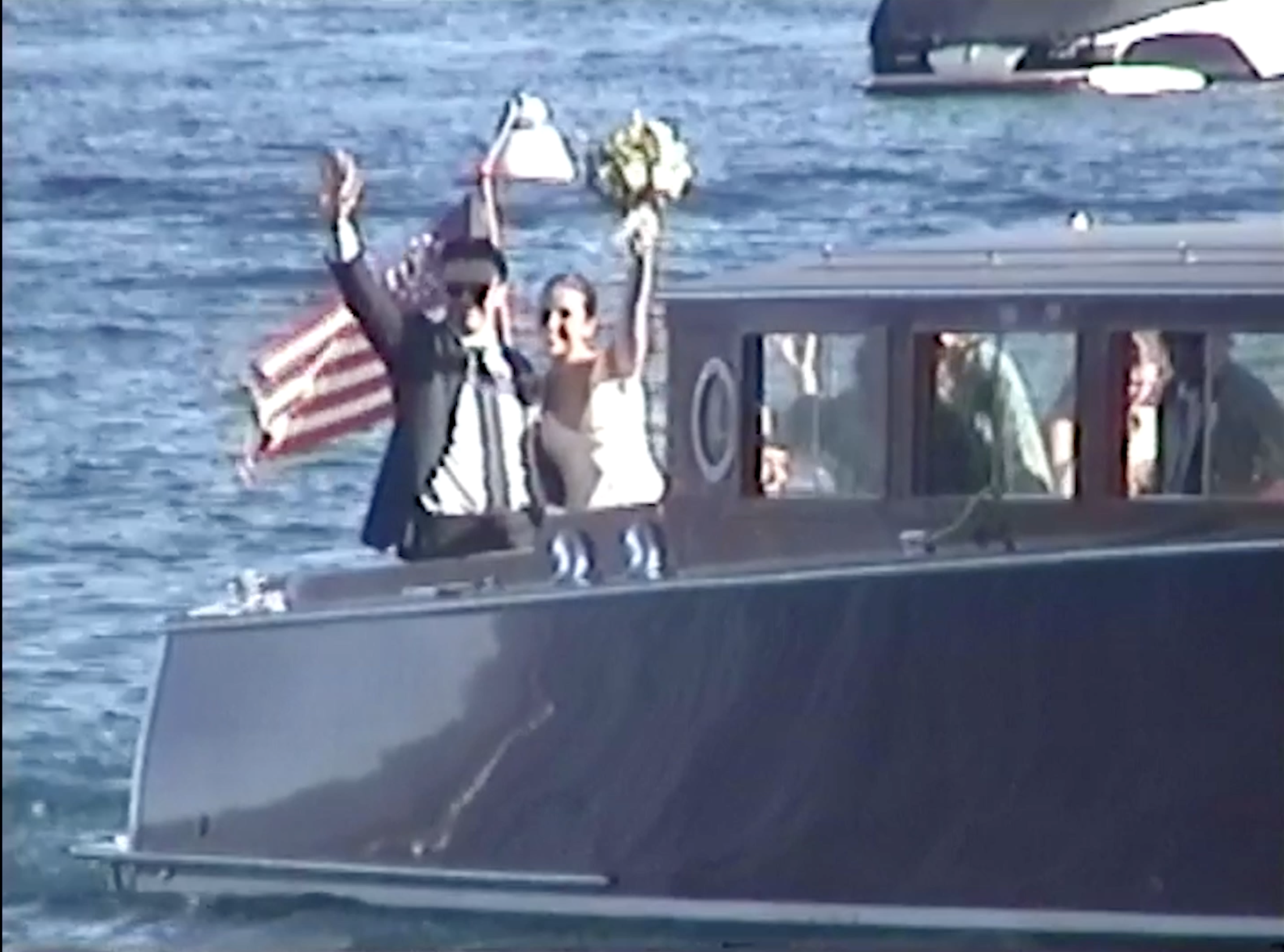
Boat entrance — 2:22 PM
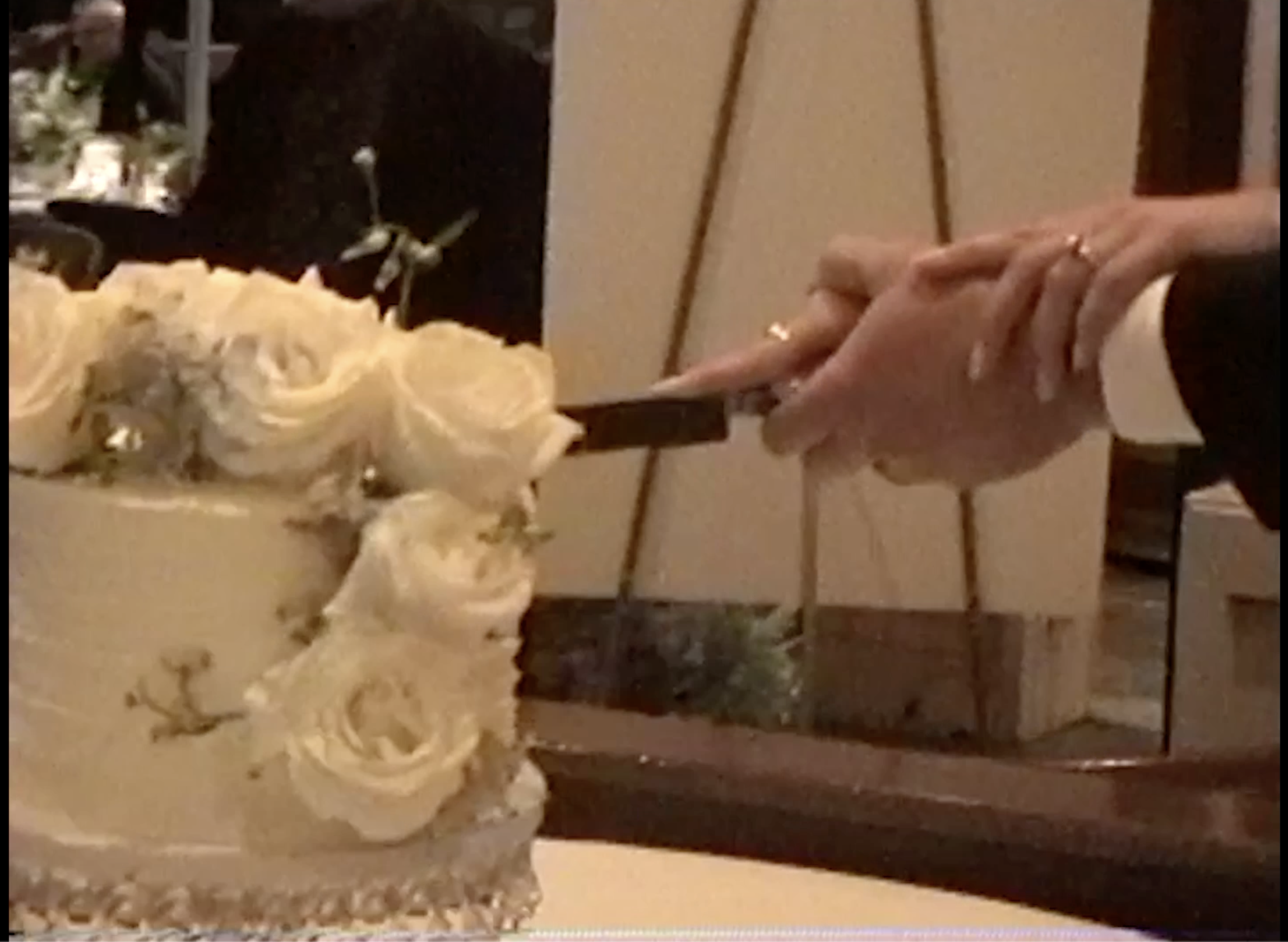
Reception cake cutting — Interior — Evening
"Favorite Place on Earth" — Afternoon light
Various dates
Random favorites & outtakes
Things that don't fit anywhere else. Moments I loved but couldn't categorize. Test shots. Happy accidents.

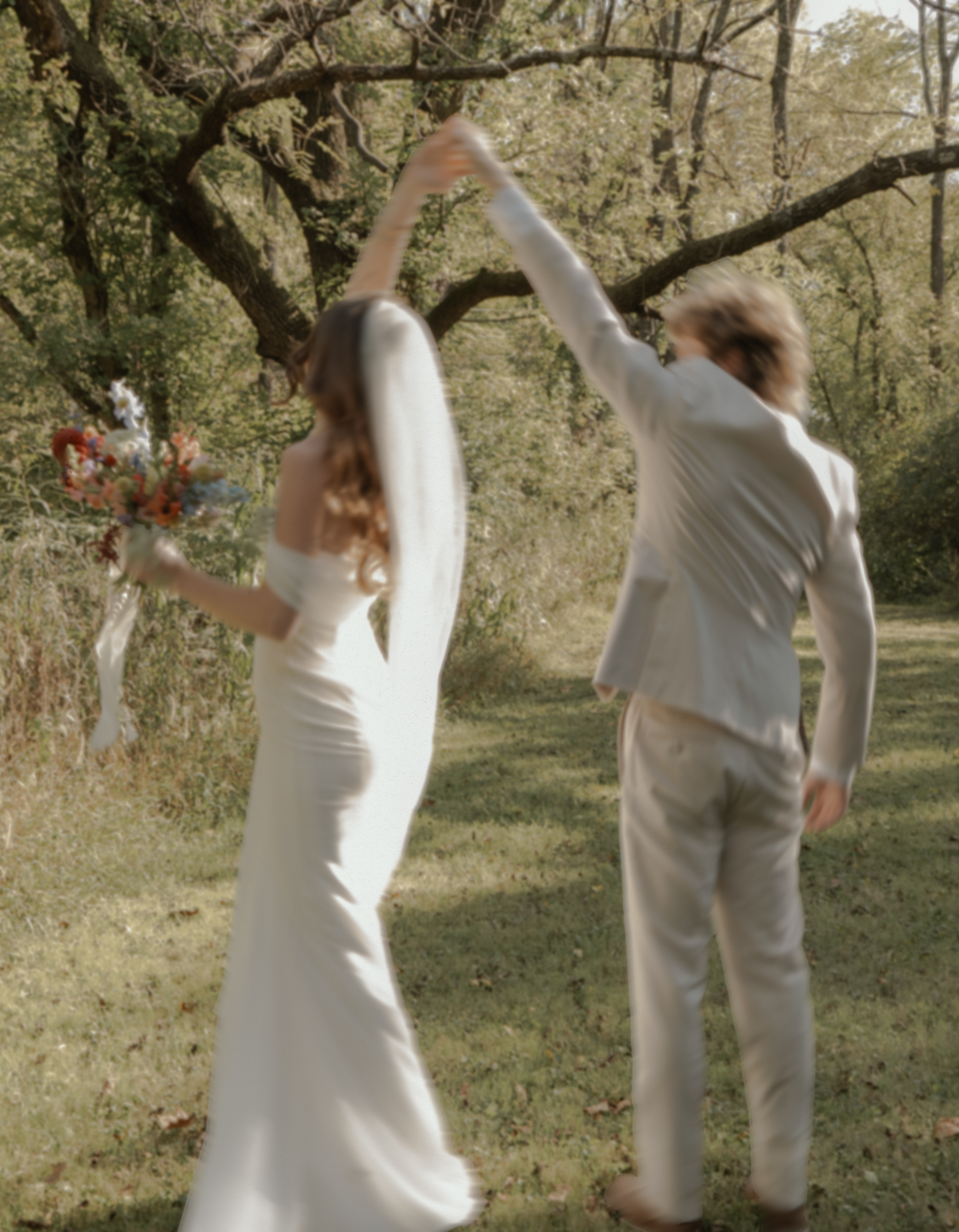
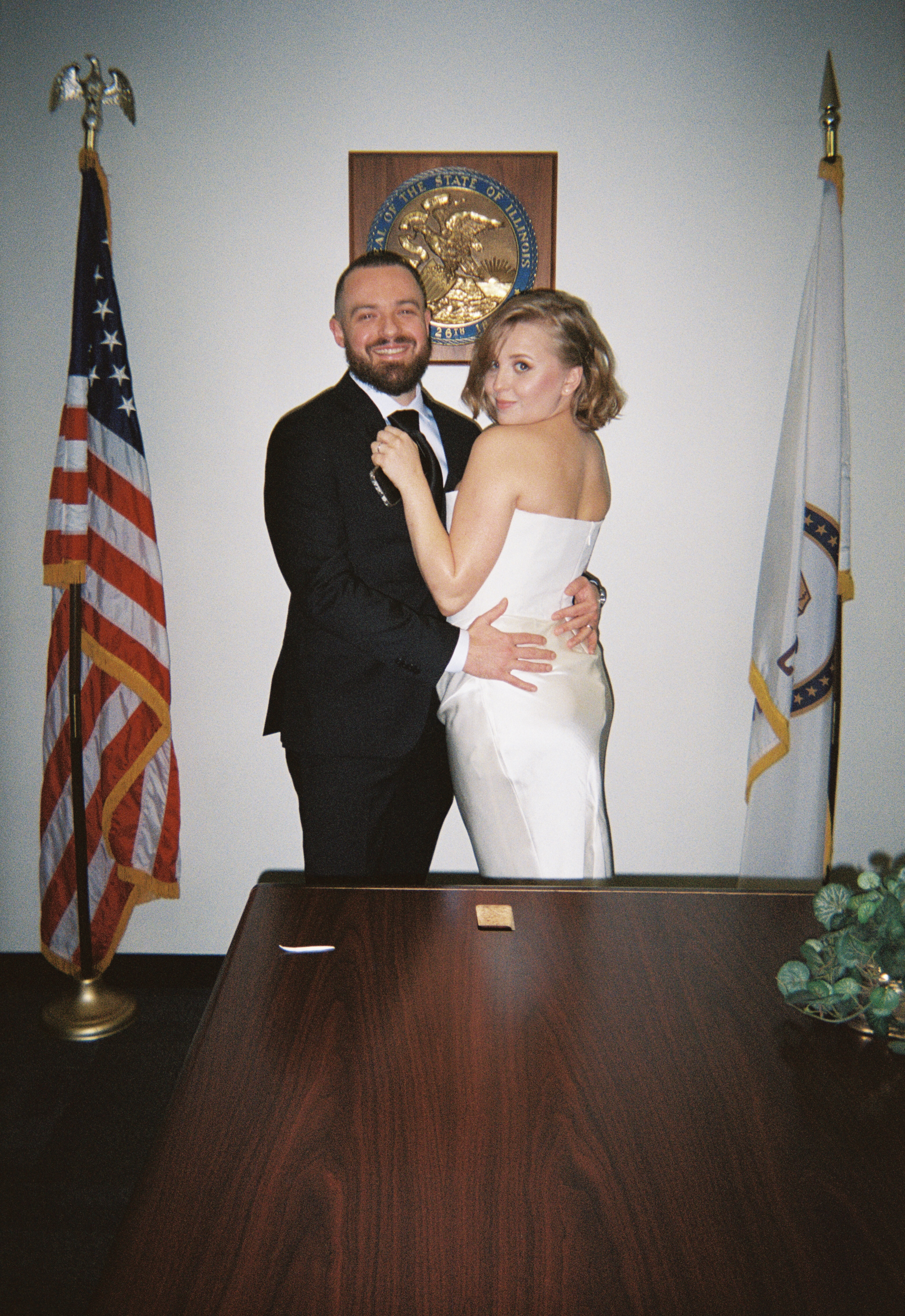
April 2026
Grandmas in Bikinis
I went home to Bloomington, Indiana the first week of April to search through my closet for some old photos I printed out in high school. (Also, why don’t we print photos anymore? I wanna leave a legacy! If my kids aren’t searching through piles of stuff and learning about my dark and torrid past, then I don’t want it!) On my search I found something else: my old Nintendo DS Nintendogs device.
While I was home I also visited my grandma. She was widowed in 2021. Something I never fully appreciated about her until recently was how much of a record keeper and journalist she was.
I make wedding documentaries on Hi8 camcorders for couples who want to make some memories. There are two reasons I think what I do is not only a great idea and a valuable artifact but something the world wants more of: First, wedding media is now all about social media performance, and this performance has cheapened our experience and corrupted truth, memory, and ultimately history. Second, the analog revival is here and it’s mainstream. These two are connected because this truth famine made us crave real life again, media ownership, real memories and experiences uninterrupted by ads. The solution to that craving is analog media. Analog media preserves something real. The Instagram version of your wedding will be forgotten but the analog version is history.